




One person takes action.
It can be something small.
Just one step, something you can do.
That step
will spread to people involved with GAMBA OSAKA.
And it will reach those close to you.
Small actions will eventually
become a great force that reaches beyond GAMBA OSAKA.
Let's start with us,
why don't we give it a try?
POLICY
Sustainability Policy
The ideal way of being
- Small actions by each individual
- Spreading from person to person
- They will eventually become a great force.
Mission
Starting with the small steps taken by each individual, we create sustainable value that spreads to the community, society, and environment.
Policy
- Cherish the "one step you can take right now."
- Connecting and expanding small actions
- Protect and nurture the Earth's environment
- Continue taking action and build on those efforts.
Keyword
One Action, Growing Impact.
NEWS
Sustainability related news
All SPL items
-
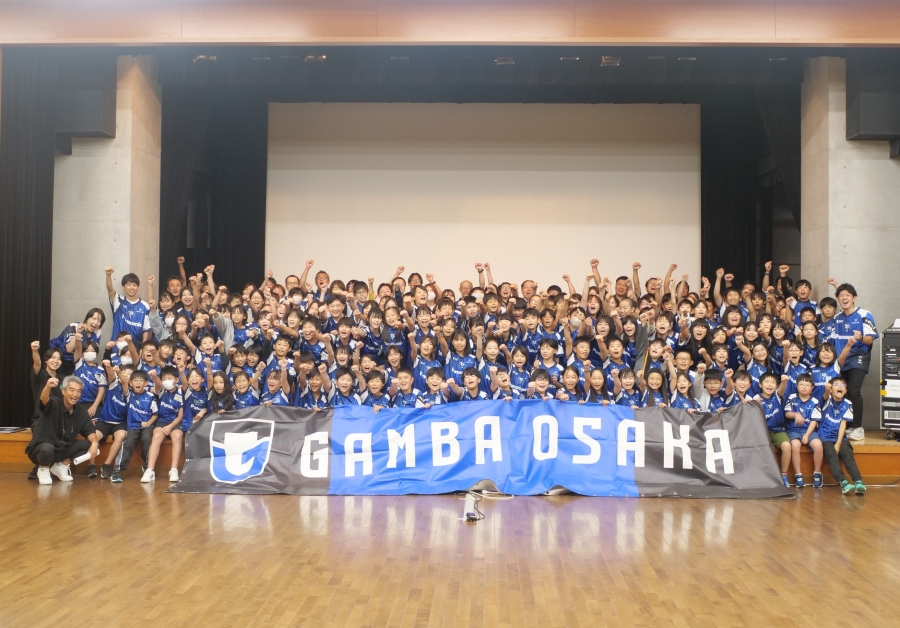 26.10.28[INFORMATION] SDGs SPL10 SPL11Report on the GAMBA OSAKA"Sustainable Training Center Mixed Session" held on October 21st (Wednesday)
-
 26.9.15[INFORMATION] SDGs SPL10 SPL11GAMBA OSAKA participates in the "Sustain Training Japan Project." They will be implementing "Sustain Training Centers" at two elementary schools in Suita City starting in September.
-
 26.6.19[HOME TOWN] SDGs SPL10 SPL11Suita Higashi High School "Comprehensive Inquiry Time" Collaborative Program Implementation Report
Action
Activity details
Activities in collaboration with partner companies
Environmentally friendly beer cup (Mori no Tumbler) (2019-present)

Together with Asahi Breweries, Ltd.and Panasonic Corporation, we are working to promote the reduction of CO2 emissions and plastic waste in consumer behavior and foster a culture of reusing beverage containers by utilizing "Mori no Tumbler," beverage containers that make high-concentration use of organic resources.Mori no Tumbler use "high-concentration cellulose fiber molding material" made primarily from pulp refined from thinned timber, and can be disposed of as paper products (combustible waste).At GAMBA OSAKA home games, there is a lot of plastic cup and PET bottle waste, and GAMBA OSAKA aims to reduce this, with the possibility of replacing all cups with "Mori no Tumbler" in the future.
"Energizing Osaka through agriculture" (2018-present)
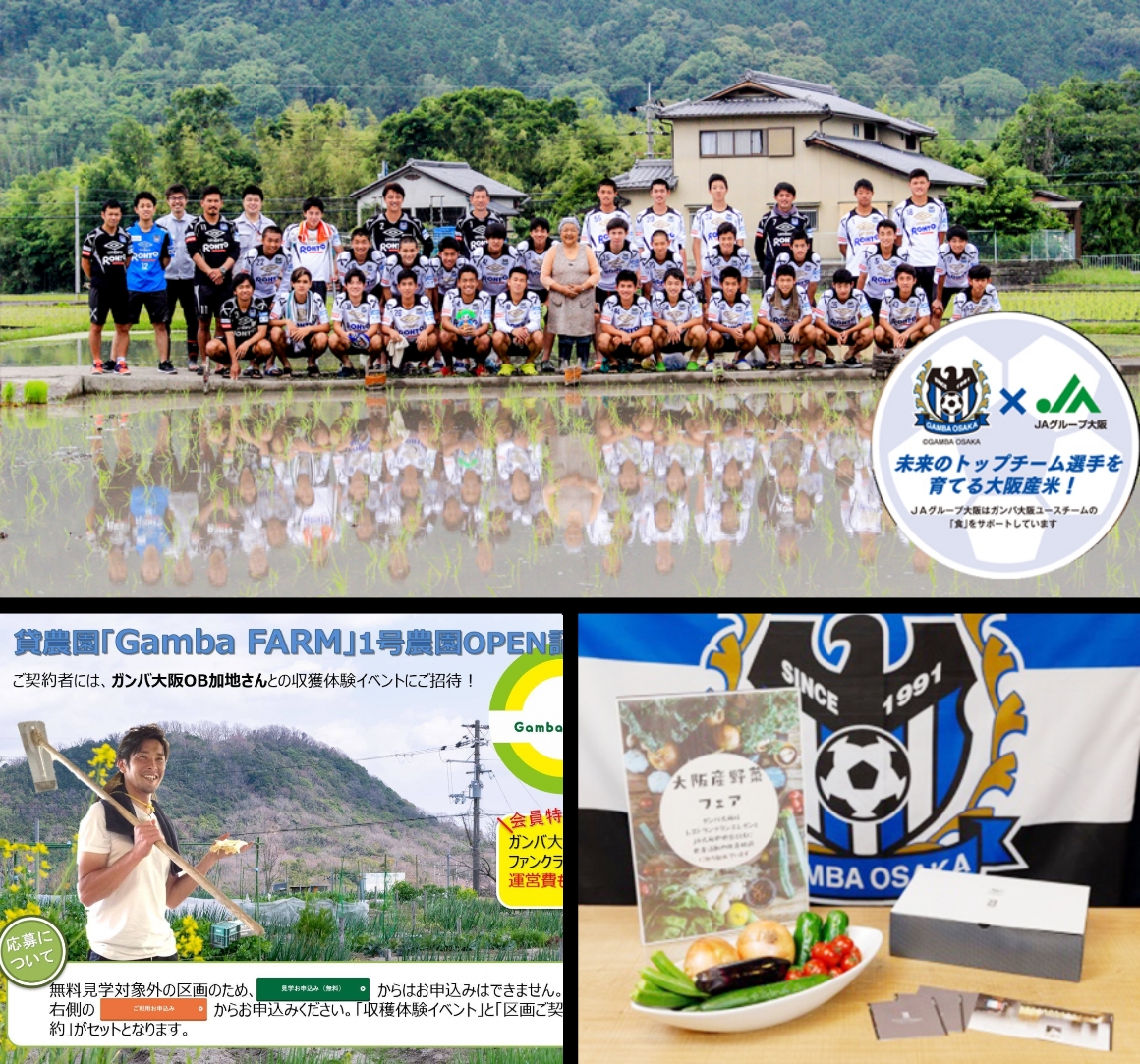
From the perspective of "sustainable consumption and production," we are collaborating with JA Osaka Chuo-kai, a partner of GAMBA OSAKA, to provide agricultural experiences for high school-aged youth players.At home games, we also give away rice balls made with locally produced Osaka rice to match attendees and offer food boxes for VIP spectators using Osaka-grown vegetables, among other activities based on local production and consumption.
Other activities
"Recycling activities using recycled plastic bottles" (2017-present)
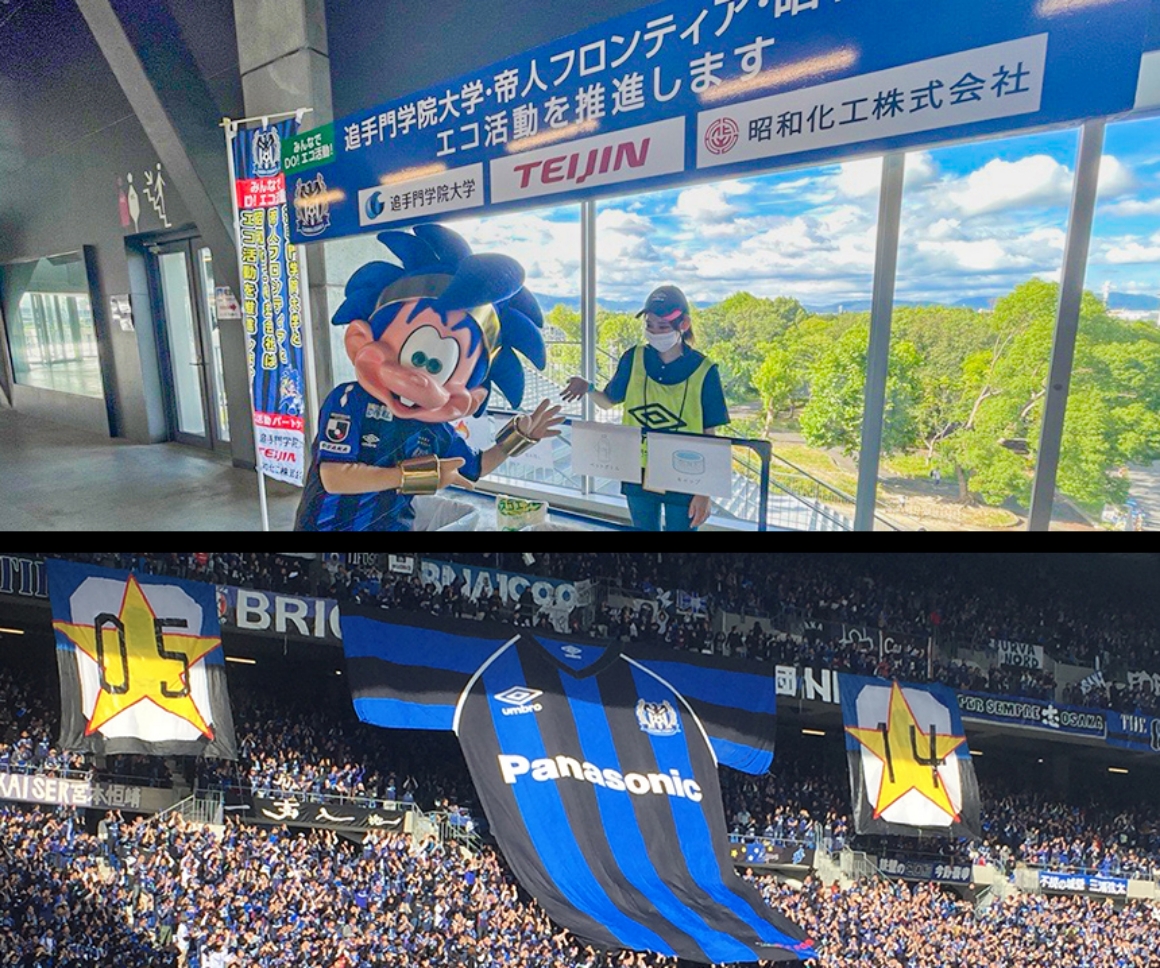
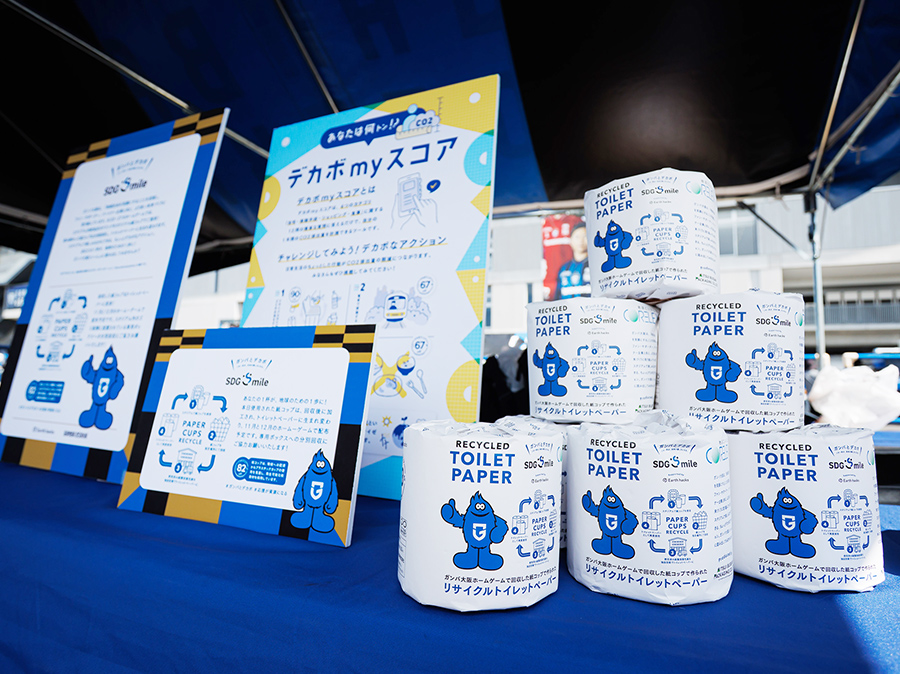
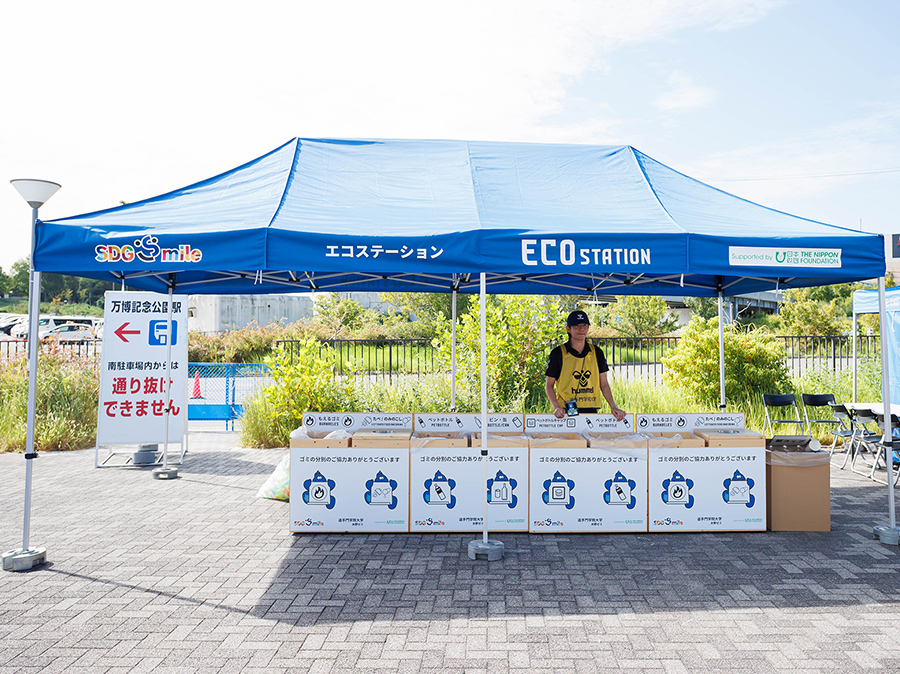
Since the 2017 season, we have been working with GAMBA OSAKA eco-activity partner, TEIJIN FRONTIER CO., LTD., to jointly conduct recycling activities for used plastic bottles generated at the GAMBA OSAKA.For the plastic bottle collection, students from Professor Koji Mizuno's seminar at the Faculty of Business Administration, OTEMON GAKUIN UNIVERSITY , also a GAMBA OSAKA eco-activity partner, call for cooperation in collection and sorting at collection points set up inside and outside the GAMBA OSAKA merchandise.
Panasonic Stadium Suita (2016-present)
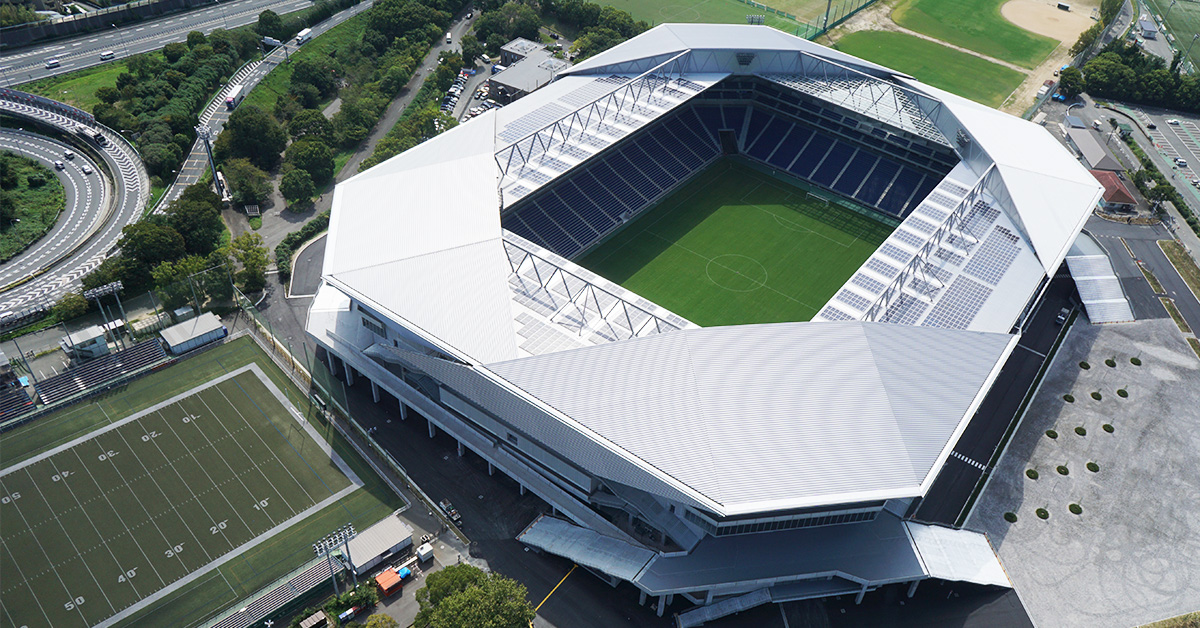
The stadium will be an eco-friendly facility utilizing LED lighting, solar power, and rainwater, and will also be equipped with a disaster relief storage warehouse, with the intention of serving as a temporary evacuation center and disaster response headquarters in the event of an emergency.
Ministry of Land, Infrastructure, Transport and Tourism "Housing and Building Low-Carbon CO2 Leading Project" / Ministry of the Environment "Project to Promote the Construction of an Independent and Decentralized Low-Carbon Energy Society"
SPL
SPORT POSITIVE LEAGUES
SPORT POSITIVE LEAGUES(SPL)

Sport Positive Leagues is a system that quantifies clubs' climate actions, allowing for an at-a-glance overview of their progress and future direction.For clubs belonging to participating leagues, it collects data on the progress of 12 key areas of climate change mitigation, encompassing a wide range of activities unique to the sports world, such as energy efficiency at match venues and facilities, use of renewable energy, recycling and waste reduction efforts, management of CO2 emissions associated with the travel of fans and players, collaboration with hometowns, and promotion of environmental education for players and others.
Subsequently, SPL's proprietary scoring system quantitatively analyzes the effectiveness of each initiative, calculating an overall score by assigning weights to categories and themes such as energy, waste, and transportation.The scores are then presented by SPL for each league in a ranking format familiar to sports clubs, showcasing participating clubs across the board.A key feature of SPL is its data-driven approach, which visualizes environmental initiatives, promotes the sharing of best practices by publishing scores, and provides a mechanism to motivate the pursuit of higher goals.
Evaluation metrics
-
Policies and commitments, reporting
It includes overall sustainability and environmental policies/strategies, and defines and publishes objective information such as Scope 1-3 emissions.
-
Renewable energy
The club aims to achieve a renewable energy ratio of 40% or more, and to build a social system that allows for continuous collaboration and cooperation with multiple stakeholders.
-

Energy efficiency
Establish and implement a systematic approach to energy efficiency (policies/strategies, monitoring, external evaluation results, etc.).
-

Environmentally friendly modes of transportation
They are visibly advocating environmentally friendly transportation policies and implementing concrete measures.
-

Reduce and eliminate single-use plastics.
Promote the removal of single-use plastics in areas used by visitors, staff-only areas, kitchens, etc., and implement a systematic approach.
-
Waste reduction and management
The goal is to set a waste incineration rate target of 50%, implement a "waste management/recycling program," and engage in the 3Rs (Reduce/Reuse/Recycle).
-
Efficient use of water
Implement policies and measures regarding water conservation, reduction, and reuse, and actually work to reduce water usage and reuse water.
-

Plant-based foods
From an environmental perspective, we will provide food and ingredients that meet sustainability standards or are sourced based on objective evidence and intentional efforts.
-
Biodiversity
By having a policy/strategy regarding biodiversity and disseminating it not only within the club but also to the local community, we are committed to supporting nature and local ecosystems.
-
education
To implement an educational program on environmental sustainability/climate change for all athletes (men, women, academy athletes, etc.), not for PR purposes.
-
Communication and Engagement
The club will establish a sustainability webpage on its official website and actively work to encourage fans and supporters to change their behavior regarding environmental awareness.
-

Sustainable procurement
The club will establish and implement a "sustainable procurement policy" that includes environmental, ethical, and social responsibility considerations for all items it handles.
For details on the evaluation metrics and point criteria, please refer to the "SPORT POSITIVE LEAGUES (SPL): J.LEAGUE Climate Action" page below.