


NEWS
NEWS
2026.11.15[U-21]
[Gamba's Future] ⑤ The current state of the academy. A vision for the future of player development.


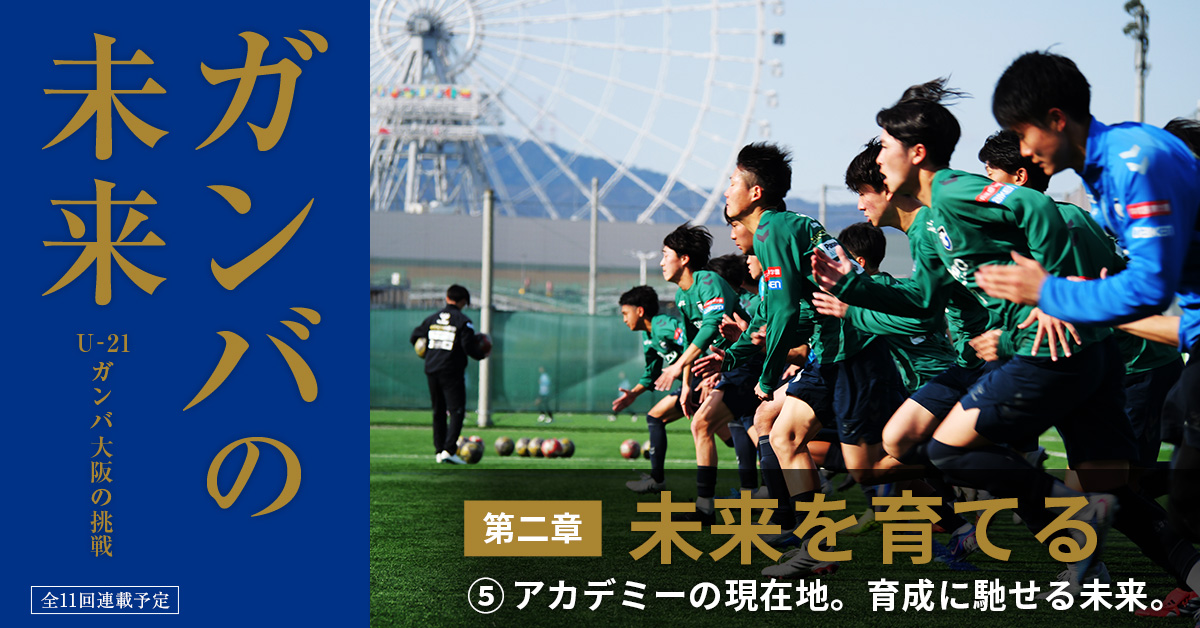
Chapter Two: Nurturing the Future.
GAMBA OSAKA has maintained a consistent coaching system from the academy to the top team since the club's inception. Even now, with 35 years of history, this unwavering philosophy has produced numerous professional soccer players. Chapter 2 looks back at the history of the academy and introduces its current state.
Under the training guidelines that have been passed down for many years, Gamba Academy has focused on the growth of "individual" players, but at the same time, Academy Director Takaaki HOSHIHARA says that "we must also keep a close eye on the changes in modern football and always be conscious of evolving." That is why the academy has started various initiatives in recent years.
Supporting this is the "High Performance Group," which was established in February of this year. Koichiro YOSHIMICHI, who serves as the physical coach for the top team, has been appointed as its chief. By sharing the physical and medical challenges of all players, from the academy to the top team, they are now working to strengthen players by working backward from "success in the top team" more than ever before. Participating in the U-21 J.League this season is also a major reason for this.
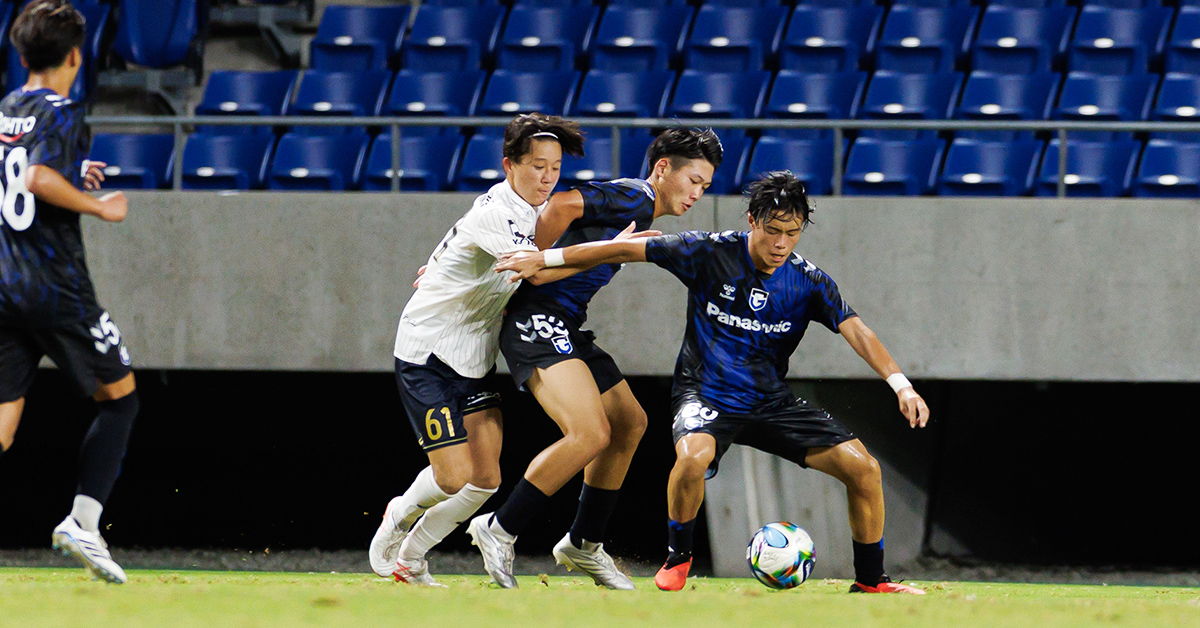
They have been participating in the U-21 J.League since the 2026/27 season.
Following the establishment of the "U-21 team," we have started activities as a "High Performance Group" with top team physical coach Yoshimichi (Koichiro) as the leader, in order to create a stronger connection between the academy and the top team. The aim is to share physical and medical challenges once a month and to clarify what needs to be done according to age. This will allow players to address physical challenges that they previously had to deal with after being promoted to the top team, starting from their time in the academy, and it will also allow us to organize what needs to be done by working backward from the "professional" level in order to hone each player's strengths. Of course, even before, when youth players participated in top team training, the top team staff would verbally tell them "these are the areas that need a little more training from a professional standard." From this year onwards, we will grasp this more accurately as the "High Performance Group," and the top team and academy staff will exchange opinions from their respective perspectives and plan player development accordingly. In that sense, I feel that it has become easier for the academy, not just the top team, but the "club" as a whole to work together towards the same goal in developing players (Ashitaka, Academy Sub-Director)
Among these changes, a significant one is the increased visibility of "Gamba's unique style" through the use of each player's "Talent ID" (Note: a development program designed to assess the aptitudes of players in their youth and develop their individual abilities), which has been in place for several years.
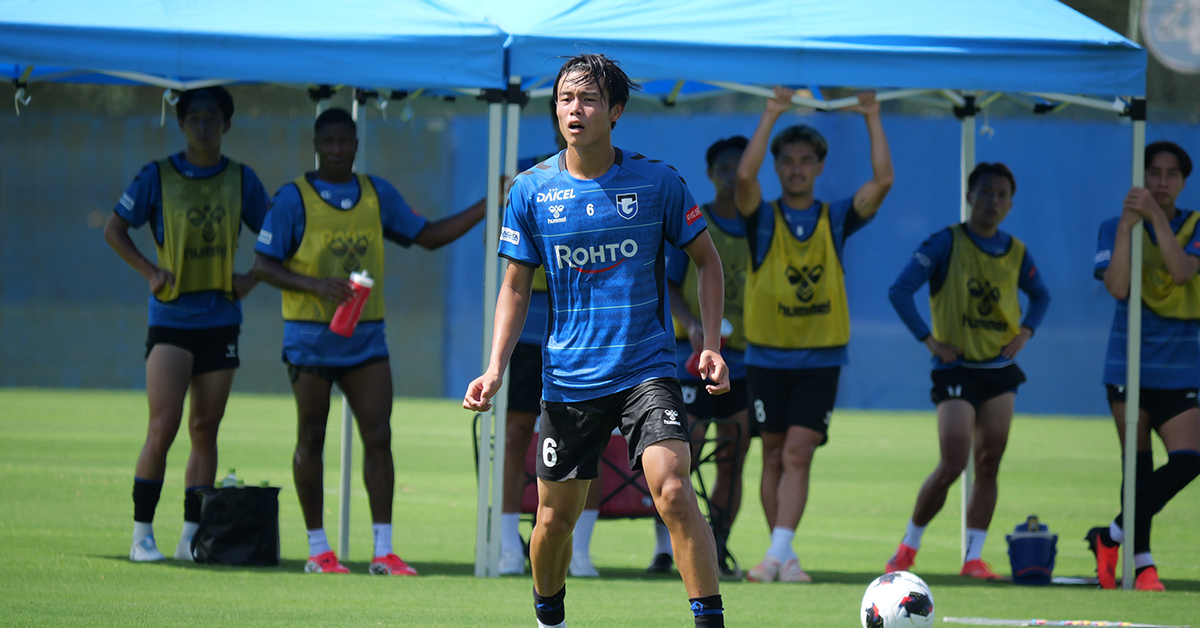
I believe that "Gamba's style" shouldn't change based on the values of the coaches. That's why, if we can use data to reveal, for example, "players with strong tactical awareness excel in these abilities," then even if the coaches change, we can use that to communicate what the players are lacking, and the players themselves will be able to better understand their own strengths and weaknesses and approach training with that in mind. In the past, when players Akihiro IENAGA(Kawasaki Frontale) and Takashi USAMI graduated from the academy, the abilities they excelled in were only passed down orally among the coaches, and there was no data to support that. Of course, there was no way to collect such data back then, but that's not the case these days. In order to pass on the academy's "assets" to the next 10 or 20 years, it's necessary to properly record them as club data and make them an asset. I hear that in Europe, even at the academy level, not only basic data such as distance covered and muscle strength are being quantified, but also individual tactical data. I believe that closely following this trend will contribute to the development of our academy (Hoshihara, Academy Director)
Another recent initiative is the club's use of strategic partnerships with AFC Ajax (Netherlands) and Buriram United FC. FC (Thailand) to provide opportunities for academy players and coaches to learn about "overseas" football.
"Our mission is to develop players who can excel in the top team, but in recent years, there has been a clear increase in the awareness and desire of young people to play overseas. With that in mind, we wanted to increase opportunities for them to experience things firsthand, not just through videos, so in recent years we have been continuously conducting overseas tours to the Netherlands and England, either as a team or by selecting individual players. Furthermore, we believe that in order to develop players who can compete at a world-class level, coaches should also understand the world, so last December, all academy staff went to Ajax for training. Of course, after each tour, we assign tasks to the coaches and have them create reports from various perspectives, which are then shared by everyone as valuable assets of the club (Hoshihara, Academy Director)."
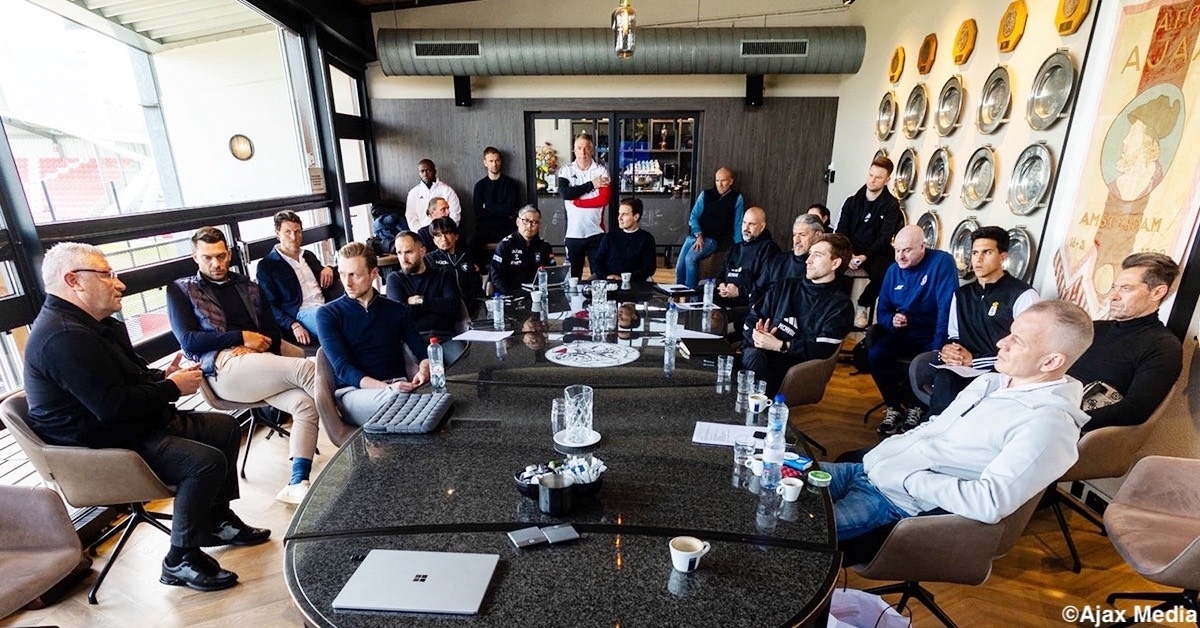
All academy staff underwent training at AFC Ajax (Netherlands).
Furthermore, beyond playing ability, for example, youth players previously lived in dormitories and attended correspondence high schools in order to secure practice time. However, this is likely due to the desire for them to "build relationships with teammates in school life and learn through activities such as cultural festivals and sports days (Hoshihara Academy Director)." Currently, most youth players are attending high school at either Hoshou High School or Otemon Gakuin High School, both run by the Naniwa Kogakuen Educational Corporation, while also playing soccer.
Furthermore, based on advice from Ritsu DOAN, Daichi HAYASHI, and Isa SAKAMOTO, who have forged "overseas" careers from the academy, that "English is absolutely essential," the academy also continuously offers online English conversation classes for those who wish to participate.
In addition, regarding the "improvement of the dining environment," which has been a concern since the establishment of the high-performance group, preparations are underway to gradually improve the academy's system in line with the improvements made to the top team's dining environment starting in October of this year.
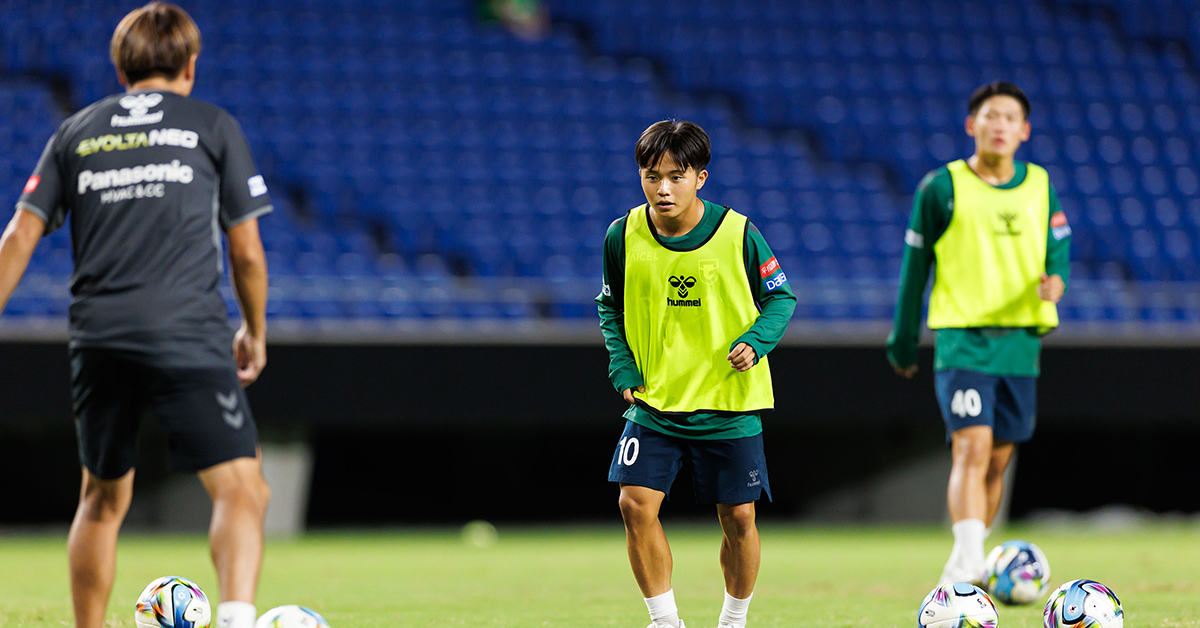
All of this is to strengthen the "core" of the Gamba Academy, while expanding the potential of each individual player. And ultimately, we envision them thriving as professional soccer players.
— Interview and text by Misa Takamura
[To be continued in the next episode]
Chapter 2, ⑥-1 / The Front Lines of Youth Development: An Interview with Junior Youth Head Coach Shohei OTSUKA
Related news
-
 26.11.15[U-21][Gamba's Future] ⑤ The current state of the academy. A vision for the future of player development.
-
 26.11.15[FAN CLUB]Notice Regarding the Start of Priority Entry Lottery for the Meiji Yasuda J1 League 15th Sec. against Okayama on November 21st (Sat) [Starting November 15th (Sun) at 12:00]
-
 26.11.15[HOME TOWN][Participants Wanted] Announcement of the 15th GAMBA OSAKA Scambio Cup Kansai Exchange Tournament Supported by S-Pool Plus
-
 26.11.14[U-21]November 16th (Mon) U-21 J.League Matchday 4th Sec. U-21 Shimizu Match : stadium gourmet Food and Drink Information - Information on Food and Drink Vendors Inside and Outside the Stadium
-
 26.11.14[INFORMATION]Wednesday, December 2nd: ACL Elite 2026/27 League Stage MD6 Match Jeonbuk Hyundai Motors- Match Information