


NEWS
NEWS
2026.8.21[U-21]
[Gamba's Future] ① What is GAMBA OSAKA's aim in participating in the U-21 J.League?


Chapter One: Envisioning the Future.
The U-21 J.League, scheduled to launch in the 2026/27 season, will feature 11 clubs this season, and GAMBA OSAKA has also announced its participation. The goal is to discover new possibilities as a development-oriented club. Chapter 1 will explore the future vision that U-21 GAMBA OSAKA is aiming for.
Last May, the J.League announced the creation of the "U-21 J.League" starting from the 2026/27 season. The main objectives are to maximize the potential of Japanese football as a whole by ensuring a playing environment where players aged 19-21, a crucial period for developing their potential as professional players, can compete in serious matches under constant scrutiny throughout the year. This season, the league will consist of two leagues, East and West, with a total of 11 clubs participating.
In response, GAMBA OSAKA also announced its participation in the league as "U-21 GAMBA OSAKA." They will first compete in the WEST League against the U-21 teams of Nagoya Grampus, Vissel Kobe, Fagiano Okayama , and V-Varen Nagasaki. President and CEO Naohito Mizutani put into words the significance of their participation.
"The idea of establishing this league came up around 2023-2024, when I was the J.League's Category Director. I myself felt the need for younger generations to gain experience in official matches, so I was immediately moved to create the U-21 J.League. Gamba has built a history as a development-oriented club since the inception of the J.League. Also, from 2016 to 2020, we participated in the J3 League as GAMBA OSAKA U-23, and players who graduated from there are now active in the J.League and the Japanese national team. Based on that experience, I thought it would be an ideal environment for player development. However, if this league is not held in a way that maintains the same level of tension as J.League matches, it will end up being no different from a practice match. We conveyed this to the J.League when we joined, and it is also shared within the club, including the management side. We would be happy if our fans and supporters understand our intentions and come to the stadium to help create what the J.League calls a "watching situation" (Mizutani)"
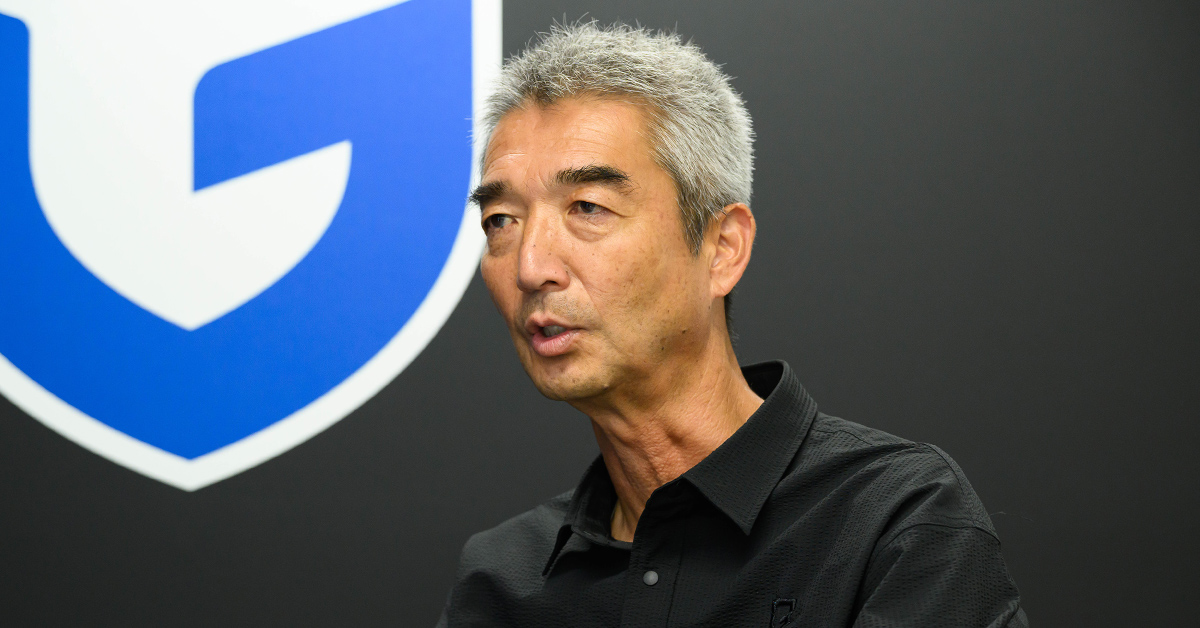
Naohito Mizutani, President and CEO
While each participating club has a different approach to team management, Gamba Osaka's U-21 team basically trains daily without drawing a line between it and the top team, and the starting lineup is decided on a match-by-match basis. According to football director Mikami Daisuke, this is because the number of U-21 J.League matches is not that large, and they decided on the club's direction after reviewing the advantages and disadvantages of the time when they competed as Gamba U-23. It also seems that they hope to broaden the experience and scope of work of the club staff by participating in the U-21 J.League.
"During the Gamba U-23 era, operations were based on the intentions of the top team's Head Coach at the time, but with Gamba U-21, the club took the lead in considering from various angles what would be best for developing young players under 21, and decided on a direction. As a result, we believe that providing young players with an environment where they can play with high awareness and gain match experience will promote their growth, so all players will fight the season as 'one team,' and members, including youth players, will be selected according to the weekend matches. Accordingly, we have also increased the number of trainers and other staff. However, we also believe it is necessary to create a challenging environment in order to cultivate a hungry spirit in young players, so we intend to intentionally mix in an environment that fosters that hunger as we develop the players (Mikami)"
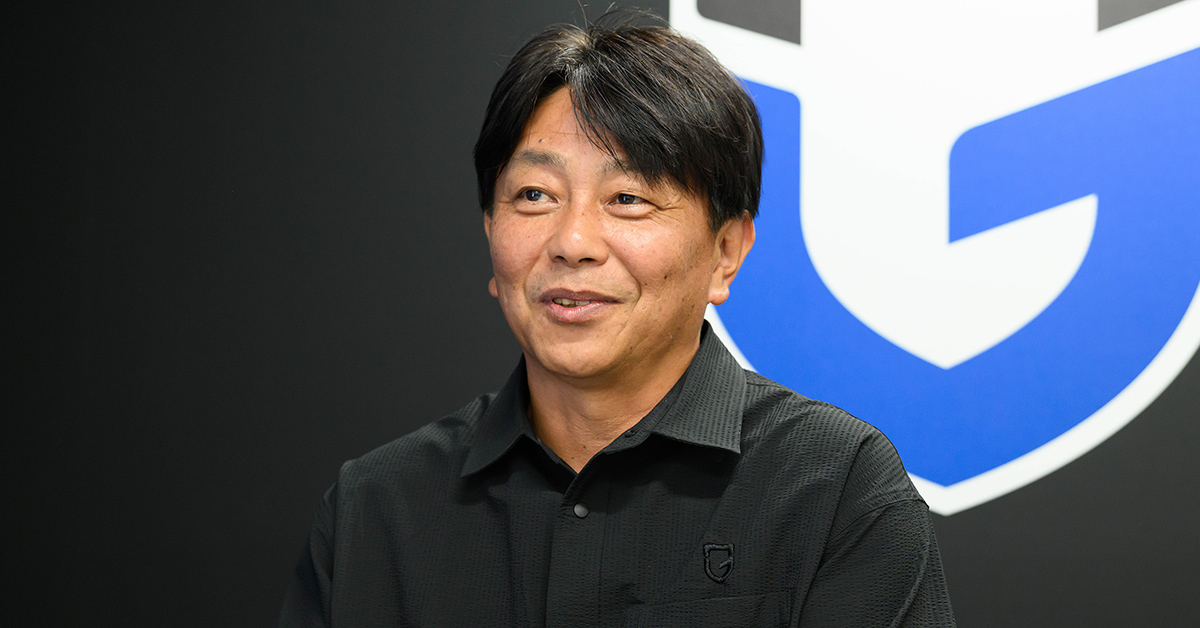
Daisuke Mikami, football director
Daisuke MACHINAKA, who has built a long coaching career at the Gamba Academy, has been appointed as the head Head Coach of the U-21 Gamba team. He will take charge based on the intentions of top team Head Coach Tomokazu MYOJIN , and in cooperation with youth team Head Coach Shigeru YOKOTANI . In addition, in order to further strengthen the vertical cooperation between the top team and the academy and to ensure smooth operation, the club plans to hold a regular meeting once a month with six people, including coaches Machinaka and Yokotani, football director Head Coach Mikami, Kentoku NOBORIO Officer Takaaki HOSHIHARA, Academy Director Hiroshi Ashitaka, and Academy Sub-Director Yuji Ashitaka.
"The club places great importance on the youth team's participation in the Premier League and several major tournaments. That's why, when youth and U-21 J.League matches clash, we've had many discussions within the club's football committee about which to prioritize. Ultimately, we decided on a club policy that, based on the perspective that our primary mission is to develop players by working backward from the top team, we should promote talented players to higher categories to give them more match experience. This is also to make the most of the development system that is unique to a J.League Clubs(Mikami)"
Within that framework, they are also drawing up a blueprint for the future. This is partly to produce players like Ryotaro MESHINO, who once played for Gamba U-23 and grew into a key player for Gamba, as well as Ritsu DOAN and Keito NAKAMURA, who represented Japan at the recent CONCACAF World Cup.
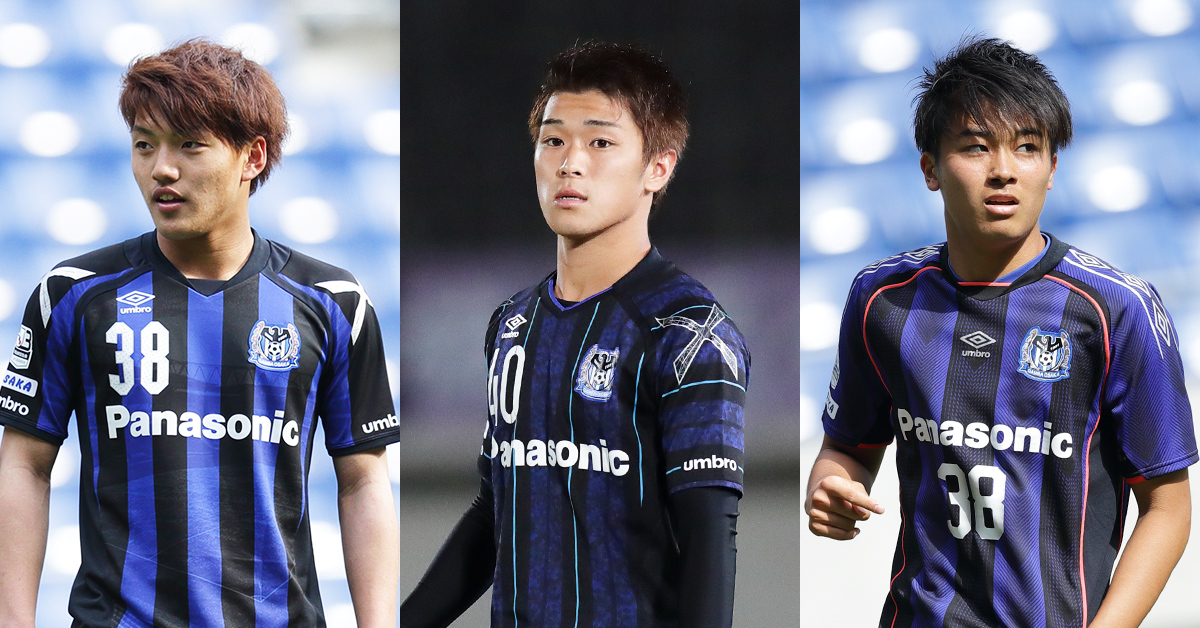
<Left> Ritsu DOAN<Center> Ryotaro MESHINO<Right> Keito NAKAMURA
"Currently, we have no plans to have junior youth players participate in U-21 J.League matches. However, as a club aiming to create an environment where players can be promoted higher and higher, it is certainly possible that junior youth players will participate in youth matches. In the future, if junior youth players end up playing for U-21 Gamba, that would be the ideal situation for both the club and the players (Mikami)."
Furthermore, to achieve this, the club also wants to develop players while clearly defining what makes Gamba unique.
"To be honest, at this point, I have to say there's a gap between the 'Gamba style' of the top team and the academy. The style of football that the top team has been implementing since the special season isn't necessarily being implemented in the academy. However, as a club, we believe that the 'technique' that the academy has valued is also an important element, so going forward, we're thinking about how much we can add the high intensity and rigor required of the top team to that aspect. This isn't something that can be established in a day or two, so we're hoping that by making good use of the U-21 J.League, in about three years, the 'Gamba style' from the academy to the top team will become a unified whole (Mikami)"
With the establishment of the U-21 Gamba team, young players will gain valuable experience playing in high-pressure official matches. How will they accelerate their growth and forge their own future? The U-21 J.League season begins, with the club aiming for further growth as a "development-oriented club."
— Interview and text by Misa Takamura
[To be continued in the next episode]
Chapter 1 ② From the field at Gamba Osaka's U-21 team: How will the new manager foster the players' development?
Related news
-
 26.10.31[U-21][Gamba's Future] ④ From the Youth Development Field. 35 years since the academy's inception. The journey of a youth development club.
-
 26.10.31[FAN CLUB]Announcement: Call for participants for the "Fan Service Event" exclusively for Royal Course members on November 22nd (Sunday)
-
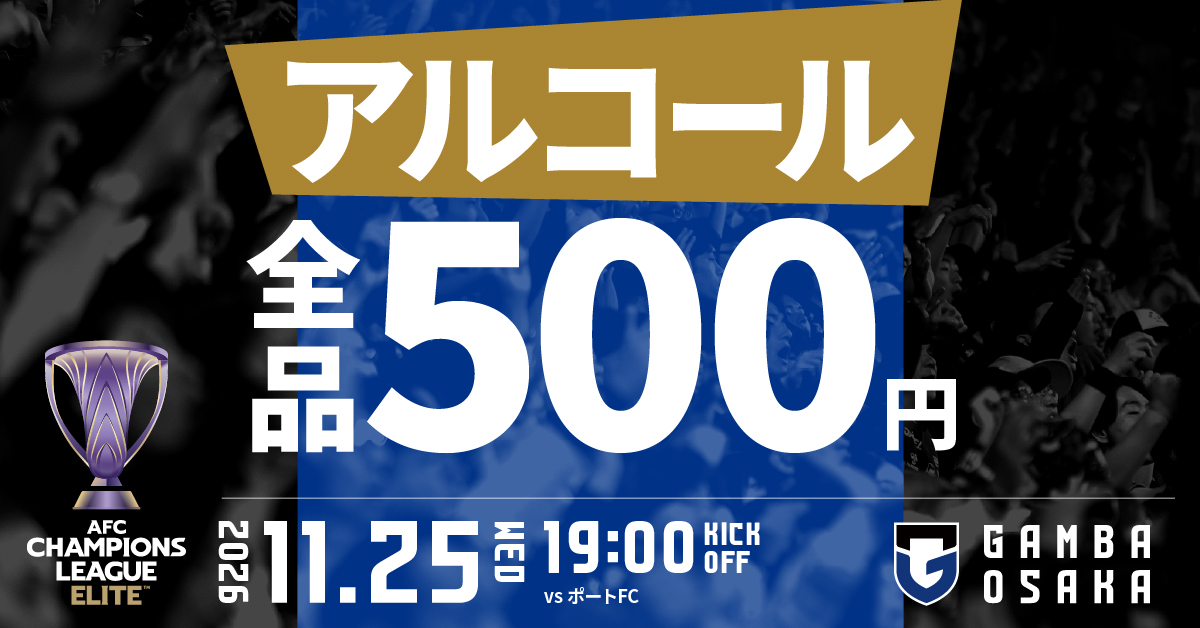 26.10.31[STADIUM INFO.]On Wednesday, November 25th, at the ACL Elite 2026/27 League Stage MD5 match against Port FC, all alcoholic beverages will be sold for 500 yen (tax included)!
-
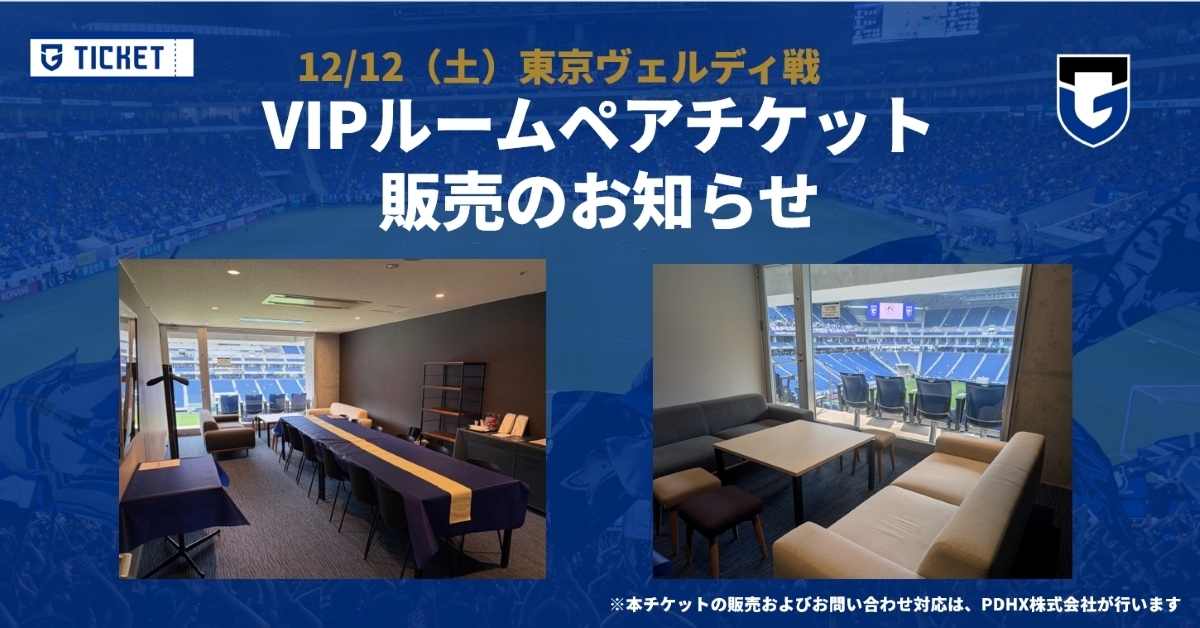 26.10.31[TICKET]Announcement regarding the sale of VIP room/pair tickets for the Meiji Yasuda J1 League 19th Sec. against Tokyo Verdy on Saturday, December 12th.
-
 26.10.31[GOODS]Notice Regarding the November Business Hours of the Official Shop "Blu SPAZIO"