


NEWS
NEWS
2024.12.16[TEAM]
[Interview between Tadashi ONO and Naohito Mizutani , Part 1] The club aims to grow while carrying on its handed down history.


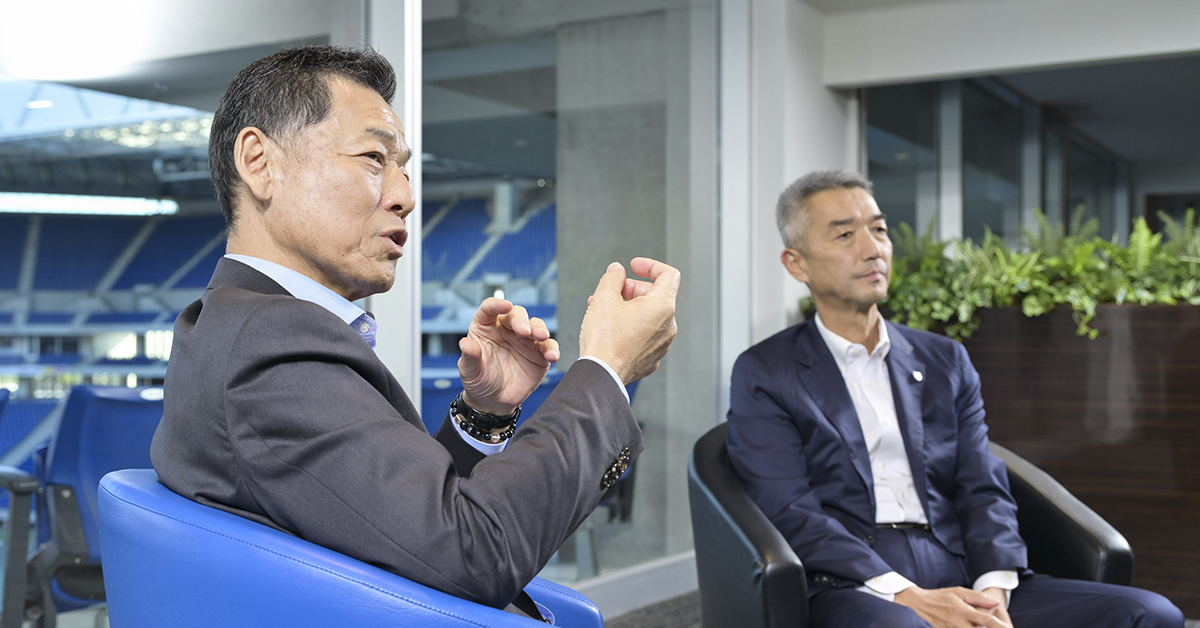
--Recently, it was announced that President Tadashi ONO would step down and that Naohito Mizutani would be appointed as the new president.
Tadashi ONO(hereinafter, Ono): I have been in charge of the team for six years since I assumed my post as vice president in 2019. I would like to take this opportunity to thank all of our partner companies, our hometown, and our fans and supporters. I still vividly remember the day I received my transfer order from Panasonic and went to Panasonic Stadium Suita to watch a GAMBA OSAKA match for the first time, experiencing the heat and excitement. I was instantly captivated, and at the same time, I felt a great sense of accomplishment and responsibility, and I continued to hold that mission in my heart for six years. Looking back at the team's performance during this period, it was by no means satisfactory to everyone, and there were many areas where I felt that I had fallen short and was lacking in ability. However, it was truly encouraging to know that even under such circumstances, so many people continued to support and cheer on Gamba. Each time, I felt a renewed sense of responsibility and gratitude. Thank you so much.
Naohito Mizutani(hereinafter Mizutani): I have taken over the baton from Mr. Ono and will be his successor. As someone who has been in the soccer world for over 20 years, I feel a great sense of responsibility in being entrusted with the important role of leading the historic GAMBA OSAKA. I have been working at the Japan Organizing Committee for the 2002 FIFA World Cup since June 1996, and when the tournament ended, Mr. Ken Naganuma and Mr. Shunichiro Okano, who were the driving forces behind the Japanese soccer world, told me, "From now on, you guys have to do it properly." Watching them work hard, I have always worked with the desire to give back to the soccer world. This feeling is still strong when I take up my new position, and I would like to firmly inherit the history that Mr. Ono and all the other previous presidents have built. However, to be honest, I still don't have a clear picture of what I can do. First of all, I think it is important to be part of the Gamba team, see and feel many things with my own eyes, and learn by communicating with many different people. Based on that, I will make decisions on the spot about what I feel is necessary.
--In the 34-year history of the club, this is the first time that a President and CEO has been appointed from outside the Panasonic Group. Please tell us how you came to be appointed as the president and CEO.
Ono: I am the eighth generation, and as you said, all of the members have come from Panasonic, a responsible company, and we have focused on the management axis. However, in the six years since I took up my position, when I thought about the future of running a professional soccer club, I realized that it would be ideal to be able to run the club while also understanding football. In order to achieve this, I thought that a person who can run both football and management in a long-term span should take the lead, rather than a transfer from a responsible company. On the premise that the relationship with Panasonic will continue in the future, Mizutani-san was chosen this time. Mizutani-san originally played soccer himself and is well versed in the world of football. He has been active globally through his work in the sports world, including as the Senior Manager of Strengthening and President and CEO of Shonan Bellmare , as well as a category director in the J.League. I believe that he will be able to take the lead and pull the club forward while making full use of his various experiences at Gamba.
Mizutani: I believe I was approached around summer this year, but to be honest, I couldn't reply right away. I've made many decisions at turning points in my career, but it was the first time I've ever replied immediately. The reason is that after watching the history of the J.League up close for a long time, I couldn't immediately imagine what I could do or how I could help. However, as I continued to talk with them after that, and as I looked at the club Gamba from the outside, I honestly faced my own feelings and felt that my desire to try was getting stronger and stronger. Personally, I felt that I wanted to take on a new challenge while I still had the physical and mental strength to turn 60.
--During the six years that you served as president, I imagine you faced challenges that were completely different from normal years, including the COVID-19 pandemic. What were those six years like?
Ono: As I mentioned earlier, in terms of the team's performance, in 2020, under the Head Coach of manager Tsuneyasu MIYAMOTO , who is also a club alumnus, we came in second in the J1 League and advanced to the EMPEROR'S CUP final. As you said, the COVID-19 pandemic was a very tough time for both club management and team operations, but we were also helped by the continued support of most of our partner companies, and we were able to start the season with great gratitude.
Mizutani: I was also serving as the President and CEO of Shonan at the time, and it was the first time the soccer world had ever faced such an event. I remember being at a loss as to what to do about infection control measures, including the suspension of official matches for over four months and the halting of team activities.
Ono: At that time, not only the sports world but the whole world came to a halt, and we were at a loss. We were searching every day for ways to overcome this difficult situation. As a club, we even removed one of the two fluorescent lights in the office to raise awareness of cutting costs...I remember that everyone was enduring and coming up with creative solutions in various places during that time. We could only communicate with our partner companies by phone or web meetings, which was frustrating at times, but we also realized and learned a lot through these interactions.
-Since 2021, the team has had a difficult time.
Ono: As you say, in 2021 and 2022, we were involved in a relegation battle. In 2023, we invited the current Head Coach, Mr. Poyatos, to bring back the Gamba identity, but at one point we showed our competitive spirit by going undefeated in eight games, including four consecutive wins and three consecutive wins. However, towards the end of the season we went winless in ten games, making it an ups and downs season and finishing in 16th place, which was a season that did not meet everyone's expectations. This season, which we hoped to continue from last year, we were able to fight with an eye on winning the title, finishing in 4th place in the EMPEROR'S CUP and reaching the Emperor's Cup final for the first time in four years, but in the end we were unable to win a title in either season, so we are passing the baton to Mr. Mizutani, knowing that we still have a lot to grow from.
Mizutani: This season, under the continued leadership of Head Coach Poyatos, I felt that the style of football that Gamba aims for was starting to permeate the team, even from the outside. My impression of Gamba has always been that they have "a lot of skilled players," but it seems like the players with potential are playing freely.
Ono: This is also linked to our management strategy, but in October 2021, the club's 30th anniversary, we took into consideration the current situation of the club and the team and clearly expressed our determination to "change Gamba", so we announced a new emblem with the goal of "Japan's Best Sports Experience Brand" as the new brand concept and the theme of achieving the goal of "BE THE HEAT, BE THE HEART". At that time, as a club and a team, we went back to the origin of where we should go and what kind of football Gamba is aiming for, and reviewed various things. In the 2023 season, when we left it to Head Coach Poyatos, we did not get the results we wanted, but we decided to continue as Head Coach with the belief that the football we are working on and the direction we are aiming for are not wrong. At the same time, based on the reflections from last year, we talked with the Head Coach and made a list of players who fit our style, and welcomed 13 new players. As a result, the football that Head Coach Poyatos aims for was more smoothly infiltrated, and we believe that this season was the season when it began to lead to results. In these reforms, I feel strongly that it is necessary for the club to have a clear axis of what kind of football Gamba is aiming for, as I mentioned earlier. In fact, this season we established a football headquarters and asked Hiroshi MATSUDA to take the helm. Within that, all coaches from the top team to the academy have met regularly to share their style and exchange opinions. In that sense, I feel that the club is gradually taking various actions to achieve its goals.
Mizutani: I think that the axis of what kind of football Gamba aims to play is a very important element in club management. This is because it has a big impact not only on team building from the academy to the top team, but also on scouting players in each category. If it becomes easier to visualize what kind of football Gamba can play, what kind of abilities they can have, and what kind of player they can become, it should be a guideline for both academy players and professional players when choosing a team.
Ono: Of course, I fully understand that the fans are looking for us to win. However, in the long run, I believe that building and implementing this style of club will definitely be an element that draws results.
Mizutani: I agree with that. Considering the potential that Gamba has, I think that if the whole club continues to move forward in the same direction, it will become a continuous "strength."
--You have implemented various reforms in your business, including the announcement of the new brand concept and new emblem mentioned earlier.
Ono: When I became president, the first thing I focused on was "Are our employees happy?" After the completion of Panasonic Stadium Suita in 2016, our business scale expanded at once, and we increased our number of employees significantly, but in fact, our turnover rate was very high. We conducted an employee awareness survey called EOS, and I'm ashamed to say that we received a very low score. I thought there must be a reason for this, so I started by finding out what our employees were thinking and how they were feeling about their work through individual interviews and daily communication with them, and I realized that they were feeling unsatisfied in the areas of "rewarding" and "work satisfaction." The big catalyst for improving this area was the announcement of the brand concept and new emblem at the 30th anniversary. In response to this, we encouraged our employees to be aware of the need for reform, and we launched many projects in various departments or teams where employees themselves said, "I want to try this," to "change Gamba," aiming for a bottom-up approach. These include the development of food and merchandise using the new mascot "MOFLEM," as well as a customer attraction project and activities that are conscious of the SDGs. In addition, we have regularly revised wages to reward results. As a result of this continuity, we have gradually seen a change in the attitudes of each employee, and an increasing number of people are feeling attached to the club and are working with a sense of fulfillment. As a result, we have also felt that the business is moving in a positive direction.
-I was also impressed by Ono's proactive efforts to turn the stadium into a "Gamba" stadium.
Ono: When I first took up the position, I found that the "Gamba color" was not felt at Panasonic Stadium Suita . There were no significant decorations on the exterior walls, and on the way to Panasonic Stadium Suita Stadium from Banpaku Station on the Osaka Monorail, there were almost no mechanisms to boost the excitement of visiting the stadium. However, when I visited various away grounds, I found that there were various mechanisms that made the club and the local community feel a sense of unity. I couldn't lose this, so I started hanging photos of the team's players on the exterior walls, and all of our employees worked together to increase the mechanisms to make people feel "Gamba" inside Banpaku koen Station and on the train. This is also related to our hometown activities. Until now, Gamba has been carrying out various activities aimed at revitalizing the local area, mainly in Suita City, Ibaraki City, Takatsuki City, Toyonaka City, Settsu City, Ikeda City, and Minoh City. One of these activities is the "Hometown Interaction Activity" in which players visit elementary schools and interact with children, which has been ongoing since 2003, and the establishment of a Hometown Support Day to promote sports. In addition, since 2021, we have signed comprehensive partnership agreements with Toyonaka City, Ibaraki City, Takatsuki City, Minoh City, Settsu City, and Ikeda City in succession, aiming to promote the health of citizens through sports and address local issues, so that people will think, "I'm glad Gamba is here." (Note: We signed a partnership agreement with Suita City in 2017.) We believe that there is still room for expansion in this area, and we hope to build even stronger relationships with the local community.
Mizutani: I myself have been involved in various sports in recent years, not just soccer, but there are many people who are encouraged by the sight of people aiming for something and putting in effort. I think that people who visit the stadium and support Gamba feel not only the fun of soccer and winning and losing, but also various emotions and emotional connections when they see the players fighting, and I feel that we have a mission to make that even bigger. That is why I think that efforts to appeal to the hearts of all those who support Gamba through various mechanisms will be very important in the future. I also think that "Gambaizing the stadium" is a very good initiative. As an easy-to-understand example, when you go to Tokyo Disneyland, the children start running on their own as soon as they get out of the station or parking lot, right? I think that excitement is still lacking in Japanese soccer stadiums, not just Panasonic Stadium Suita Stadium, so I would like to think of various atmospheres and mechanisms that will naturally create that excitement.
-Following last year's partnership with Chonburi FC, a strategic partnership with AFC Ajax has also been one of your new initiatives in recent years.
Ono: When we came up with our new concept, we decided to go beyond the field of soccer and create new experiences, the greatest enthusiasm, and bring a new style to people's lives, so we put our determination into the phrase "Becoming Japan's leading sports experience brand." This is because we want to grow not only in Asia but also globally. One of our initiatives is the ASEAN strategy that utilizes partnerships. Although we had felt the need for an ASEAN strategy for some time, we had not been able to take any continuous action, so we decided to select a partner and strengthen our collaboration by partnering with Chonburi FC in Thailand. In addition, in order to build relationships with Europe, the center of the soccer world, we began researching more than 10 clubs across Europe and actually visited the sites to conduct interviews. After that, we narrowed it down to "a club that puts effort into developing players from the academy," which is what Gamba should aim for, and we realized our business partnership with Ajax.
Mizutani: I think it is an important initiative that is absolutely essential for the club's future. When I think back to when I was in high school, the Japanese national team was losing 2-5 to the Thai national team, and there was a time when we couldn't beat Indonesia or Malaysia. If you ask why the Japanese national team has been able to grow so much, I think the launch of the J.League was a huge factor. As someone who knows the process, I think that the J.League should continue to contribute to Asia as a way of giving back. Also, objectively speaking, the cutting edge of the soccer world is in Europe. In particular, the Netherlands is a country that was considered to be the pioneer of total football, and Ajax is known as a team that is good at training. That links with the type of club that Gamba aims to be, and I think there is a lot to learn from it.
Ono: This summer, top team players Isa SAKAMOTO and Shinya NAKANO participated in Ajax training, and strengthening the players through the partnership is one of our goals. Given that many players have been looking to go abroad in recent years, we want to make the opportunity to have such experiences one of the club's attractions. In addition, in January of next year, the academy's Head Coach and coaches will visit Ajax for training. We hope that they will bring back to the club what they have learned through these opportunities.
Mizutani: I think it's a very interesting initiative because training coaches is essential for the future development of soccer and Gamba. It is still difficult for Japanese coaches to become Head Coach or coaches in Europe, and many of them go there by themselves through connections. That's why it would be ideal if the club could support them.
(Continued in Part 2)
-
Text by Takamura Misa
Related news
-
 26.10.25[GOODS][Online Shop] Halloween-themed goods will be available for purchase from 12:00 PM on Monday, October 26th.
-
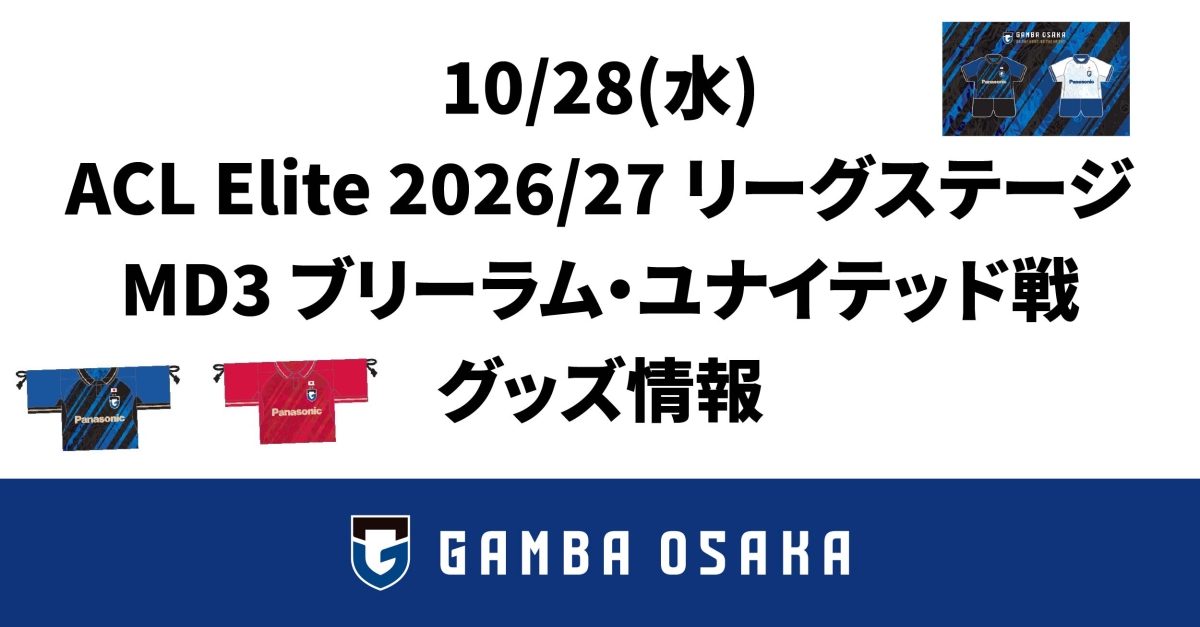 26.10.25[GOODS]Merchandise information for the ACL Elite 2026/27 League Stage MD3 match Buriram United FC. on Wednesday, October 28th.
-
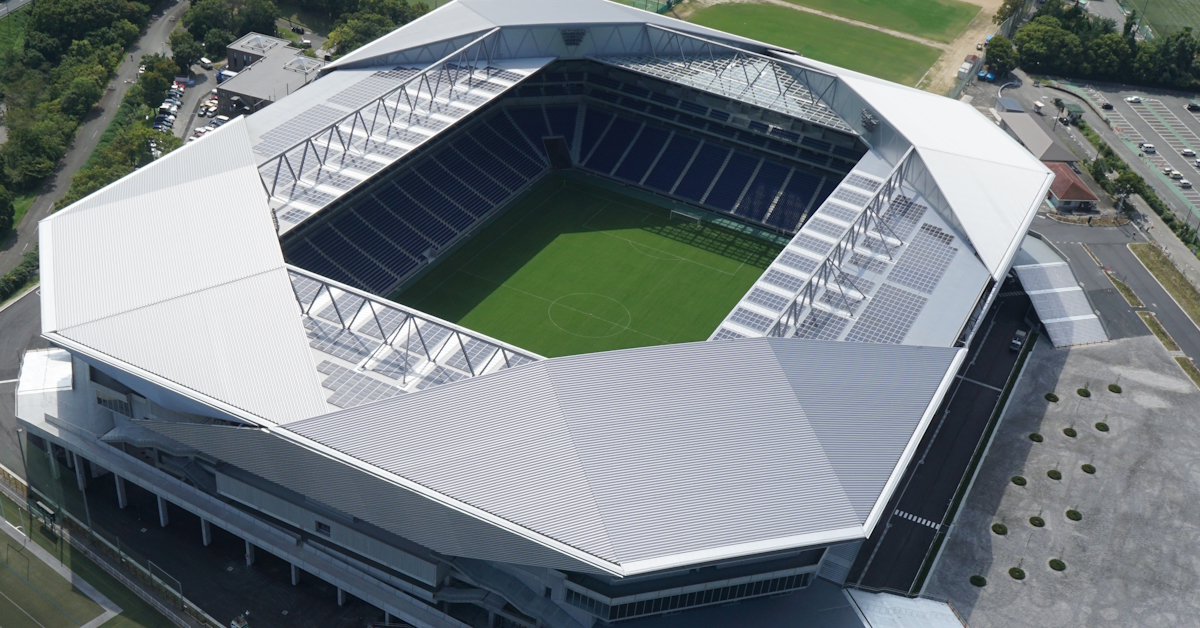 26.10.25[INFORMATION]Announcement of November Stadium Tour
-
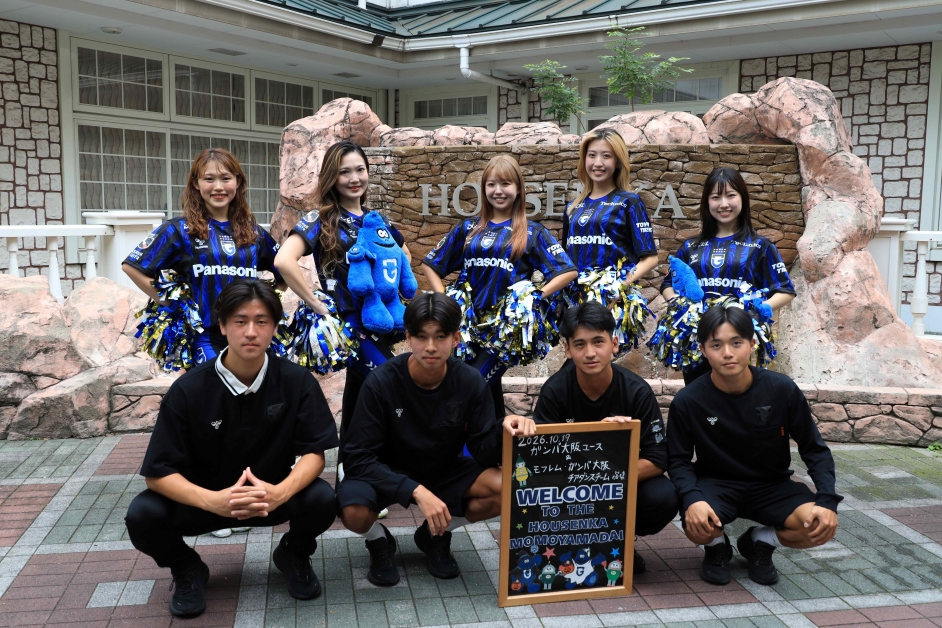 26.10.25[PARTNER]Report on participation in the Housenka"Autumn Festival" event on October 19th (Monday)
-
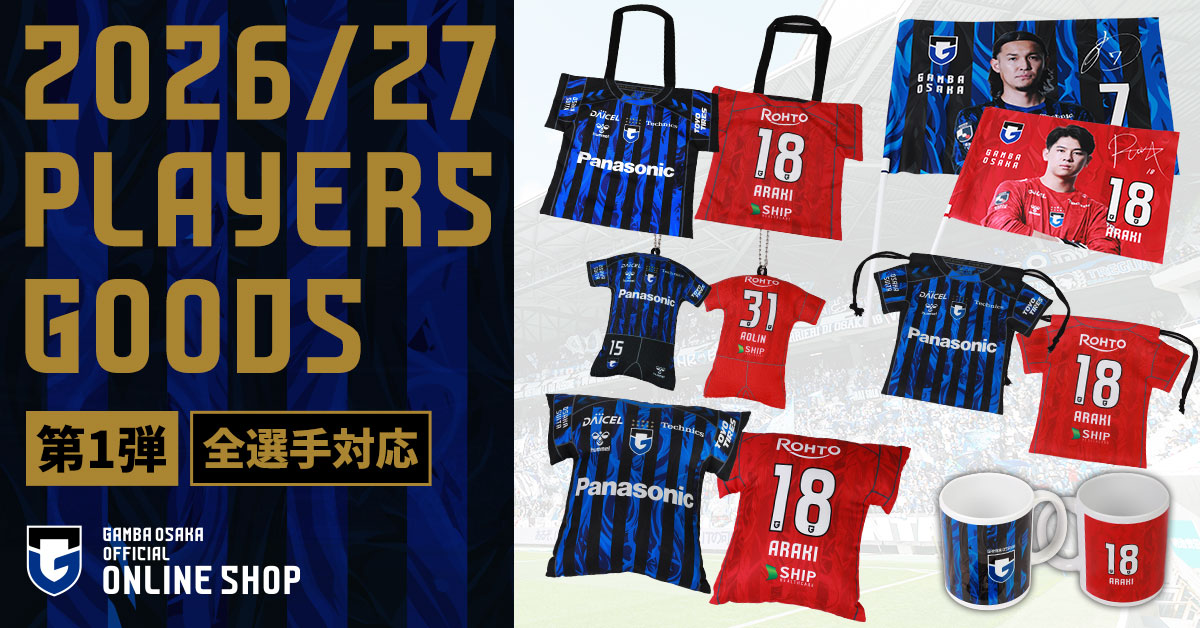 26.10.25[GOODS][Online Shop] Announcement of the first round of pre-orders for player merchandise featuring all players.